What is talent acquisition?

Talent acquisition
Talent acquisition is the strategic process of identifying, attracting, and onboarding top talent to meet organizational needs efficiently and effectively. It transcends the traditional realm of hiring to encompass a broader perspective focused on long-term HR planning.
It aims to understand the deeper facets of candidates beyond their qualifications. This includes exploring their potential for cultural fit, growth, and contribution to the organization's goals. It integrates factors such as employer branding, candidate experience, advanced analytics, and technology to secure a competitive edge in the global talent landscape.
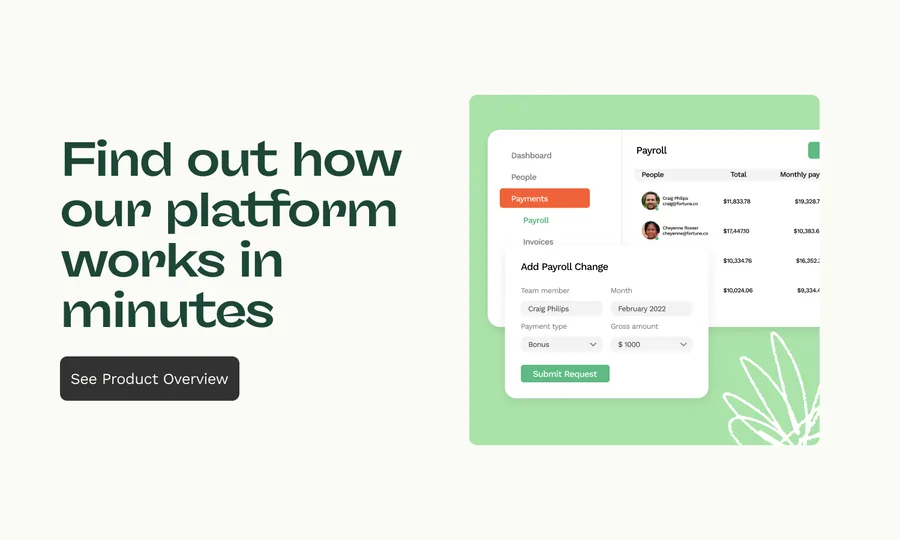
Interested in Oyster but want more information about how the platform works? This product overview should help.
For many companies, talent acquisition plays an instrumental role in shaping the future of their workforce, especially as more than a quarter of employees (28%) report they are likely to switch employer in the next year. This article explores key strategies, the talent acquisition process, team roles, and the technology that powers modern hiring—plus how to build a global talent acquisition strategy that works.
Common talent acquisition strategies
So, what are the key talent acquisition strategies that actually work? These approaches form the backbone of building a talented, diverse workforce that drives organizational growth:
- Employer branding: The perception of an organization in the eyes of potential employees can impact talent acquisition. Companies should focus on portraying a positive image, highlighting their culture and opportunities for career growth, especially since two-thirds (67%) of workers considering leaving view skill development as a key factor in any decision to switch jobs.
- Candidate experience: From the first interaction to onboarding, leading organizations strive to provide a seamless, respectful, and engaging experience. This strategy increases the chances of securing top candidates while simultaneously enhancing the company's reputation in the job market.
- Talent pools: Organizations should maintain a database of potential candidates, including previous applicants, interns, and passive candidates who may not be seeking a job change immediately.
- Social recruiting: With the rise of social media, companies are using platforms like LinkedIn, Twitter, and Facebook to attract talent. These efforts can tie into your employer branding by making company culture visible across platforms.
- Technology integration: Leverage AI, machine learning, and data analytics to streamline the recruitment process, as 91% of business leaders expect productivity to increase due to GenAI, making the process more efficient, less costly, and bias-free. Automating the early stages of the hiring process can free up time and resources for later stages that require more hands-on effort and human presence.
Talent acquisition versus recruitment
Although similar in many ways, talent acquisition and recruitment encompass distinct elements of the hiring process.
Recruitment is a short-term, reactive strategy that fills immediate vacancies in an organization. It focuses heavily on advertising roles, screening applicants, conducting interviews, and making job offers.
Conversely, talent acquisition is a long-term, strategic process aimed at attracting, finding, and hiring individuals for key roles or skills that are critical to the company's growth, especially as over half of employees likely to leave their jobs recognize the skills their job requires will soon change. It considers the overarching business strategy, future workforce planning, employer branding, and candidate experience.
Here's a quick comparison:
Recruitment
Talent Acquisition
Short-term, reactive
Long-term, strategic
Fills immediate vacancies
Builds talent pipelines
Focus on advertising and screening
Focus on employer branding and candidate experience
Transactional approach
Relationship-building approach
Recruitment is about filling roles, but talent acquisition is about finding the right fit for the organization's current and future needs. Both approaches serve a purpose, but talent acquisition is a more proactive approach that allows employers to build relationships within their industry and create a reputation as a desirable place to work.
The talent acquisition process
What does a strategic talent acquisition process actually look like? It's more than just filling open roles—it's a continuous cycle that follows these key stages:
- Sourcing: Proactively identifying and engaging potential candidates—both active and passive—through various channels. This isn't just about posting a job; it's about building talent pipelines for future needs.
- Screening and assessment: Evaluating candidates not just for skills, but for their potential to grow with the company and contribute to its culture is becoming a mainstream practice, with 89% of leaders planning to become a skills-based organization. This stage focuses on a holistic view of the candidate.
- Interviewing: Conducting structured conversations designed to assess a candidate's capabilities, motivations, and alignment with the company's long-term vision.
- Offering and closing: Presenting a competitive offer that considers salary, benefits, and growth opportunities. The goal is to secure the best talent, not just fill a seat.
- Onboarding: Integrating new hires into the company culture and setting them up for long-term success, ensuring a smooth transition from candidate to valued team member.
Talent acquisition team roles
Who do you need on a talent acquisition team? While smaller companies might have one person handling everything, most successful teams include these specialized roles:
- Talent Acquisition Manager: This leader develops the overall talent acquisition strategy, aligns it with business objectives, and manages the hiring team and budget.
- Talent Sourcer: A specialist focused on finding and engaging passive candidates. They build talent pools and are experts at identifying potential hires who aren't actively looking for a new job.
- Recruiter: This person manages the end-to-end hiring process for specific roles, from screening applicants to coordinating interviews and extending offers. They are the primary point of contact for candidates.
What is a talent acquisition platform?
A talent acquisition platform is software that automates and streamlines your entire hiring process—from attracting candidates to onboarding new hires.
This technology integrates various components of the hiring process into a single centralized system. It can help with a number of tasks, such as managing job postings, sourcing candidates, screening resumes, tracking applicants, and onboarding new hires. Being consistent between candidates is also a major part of creating a positive interview and employee experience.
Here are some of the top benefits of using a talent acquisition platform:
- Efficiency and organization: By automating repetitive tasks such as screening resumes and scheduling interviews, recruiters can focus on higher value tasks. The platform also organizes all the information in one place, making it easier to track candidate progression.
- Data-driven decision-making: A talent acquisition platform offers advanced analytics capabilities, enabling HR teams to make data-backed decisions. You can create a candidate scoring system that assigns points to skills that match a job listing exactly and those that provide value to the company, even if they're not specified in a listing.
- Enhanced candidate experience: By streamlining the application and interview process, the platform can significantly improve the candidate experience, which is crucial given that 60% of frontline workers, including recruiters, are unsatisfied with the technology provided by their employers. This can boost the company's employer brand, making it more attractive to high-quality candidates.
Building your global talent acquisition strategy
Talent acquisition isn't just a process; it's a strategic advantage. By moving from reactive recruiting to proactive talent strategy, you can build a stronger, more resilient workforce that's ready for the future. For distributed teams, this means thinking globally from day one.
A well-defined strategy ensures you can find, attract, and retain the best people, no matter where they live. When you're ready to build a team without borders, Oyster provides the platform to make it happen. Start hiring globally and turn your talent acquisition goals into reality.
FAQ’s
What does a talent acquisition specialist actually do day-to-day?
In practice, a Talent Acquisition Specialist is the person who makes “strategic hiring” real in the trenches. They translate a hiring manager’s wish list into a usable intake, build a sourcing plan, run screening and interviews with consistent rubrics, and keep candidates warm while stakeholders debate. On global roles, they also end up as the air-traffic controller for compliance-adjacent details like worker type (contractor vs. employee), right-to-work constraints, and what “competitive” pay and benefits look like locally—because the fastest way to lose a great candidate is to surprise them with a contract that doesn’t match their country’s norms.
What’s the difference between a talent acquisition partner and a recruiter?
A recruiter is typically measured on filling roles efficiently, while a talent acquisition partner is accountable for how hiring supports the business over time. That shows up in how they work: TA partners push for clearer workforce planning, better interview training, and stronger compensation and leveling guardrails, and they’ll challenge a role that’s mis-scoped or impossible to close. If you’re hiring across countries, a true TA partner also flags operational risk early, like when a “quick contractor” plan is really an employee role in disguise, or when local notice periods could change how you think about hiring for critical coverage.
How do you decide whether to engage someone as a contractor or employ them as a full-time employee?
Start with the uncomfortable questions, not the budget. If you control the person’s schedule, tools, and day-to-day work, expect exclusivity, or the role is core to your org (think ongoing product, customer success, or people management), you’re drifting into employee territory in many countries. Contractor misclassification can create real exposure, including back taxes, penalties, and disputes over benefits and termination rights, and it often shows up at the worst possible time, like diligence, an audit, or a termination. The safer approach is to pressure-test the relationship up front, document the reality of the engagement, and be willing to convert when the role becomes ongoing or tightly managed.
What are the biggest compliance risks that can derail a global talent acquisition plan?
Most global hiring problems aren’t about finding talent—they’re about underestimating local rules. The common derailers are misclassification, using non-compliant offer terms that don’t reflect statutory requirements, mishandling payroll and required employer contributions, and applying “one-size-fits-all” policies that conflict with local leave, benefits, or termination protections. Payroll compliance is especially unforgiving because small process gaps can cascade into incorrect withholding, late filings, or mismatched pay schedules. If you want global talent acquisition to scale, you need a repeatable way to validate country-specific requirements before you extend an offer, not after the candidate has resigned.
How can I estimate the true cost of employing someone in another country (beyond base salary)?
Base salary is only the starting point. The true cost of employment can include mandatory employer contributions, statutory benefits, country-specific payroll taxes, and one-time or recurring administration costs that vary by location. This is exactly why Finance gets skeptical in planning meetings: they’ve seen teams commit to headcount without accounting for the full employer burden, currency considerations, or the costs tied to compliant employment terms. If you want a fast way to model scenarios by country, use Oyster’s Global Employment Cost Calculator to estimate total employment costs and avoid getting surprised after you’ve already shortlisted candidates.
.webp)
About Oyster
Oyster is a global employment platform designed to enable visionary HR leaders to find, hire, pay, manage, develop, and take care of a thriving distributed workforce. Oyster lets growing companies give valued international team members the experience they deserve, without the usual headaches and expense.
Oyster enables hiring anywhere in the world—with reliable, compliant payroll, and great local benefits and perks.

Related Resources
.avif)
9 steps for a successful hiring process
Create a detailed and thorough hiring process.

What is talent mapping? A complete guide for strategic hiring
Talent mapping helps organizations identify skill gaps

Understanding cultural differences in the international recruitment process: Tips for success
Efficiently engage & communicate with top talent.

Employer branding strategy: How to attract and develop top talent
Want to stand out as a top employer? Good pay isn't enough. A strong employer branding strategy helps differentiate your company and attract the right talent.

Why US companies are hiring remote talent in Latin America in 2025
Explore why Latin America is a top tech talent market.
